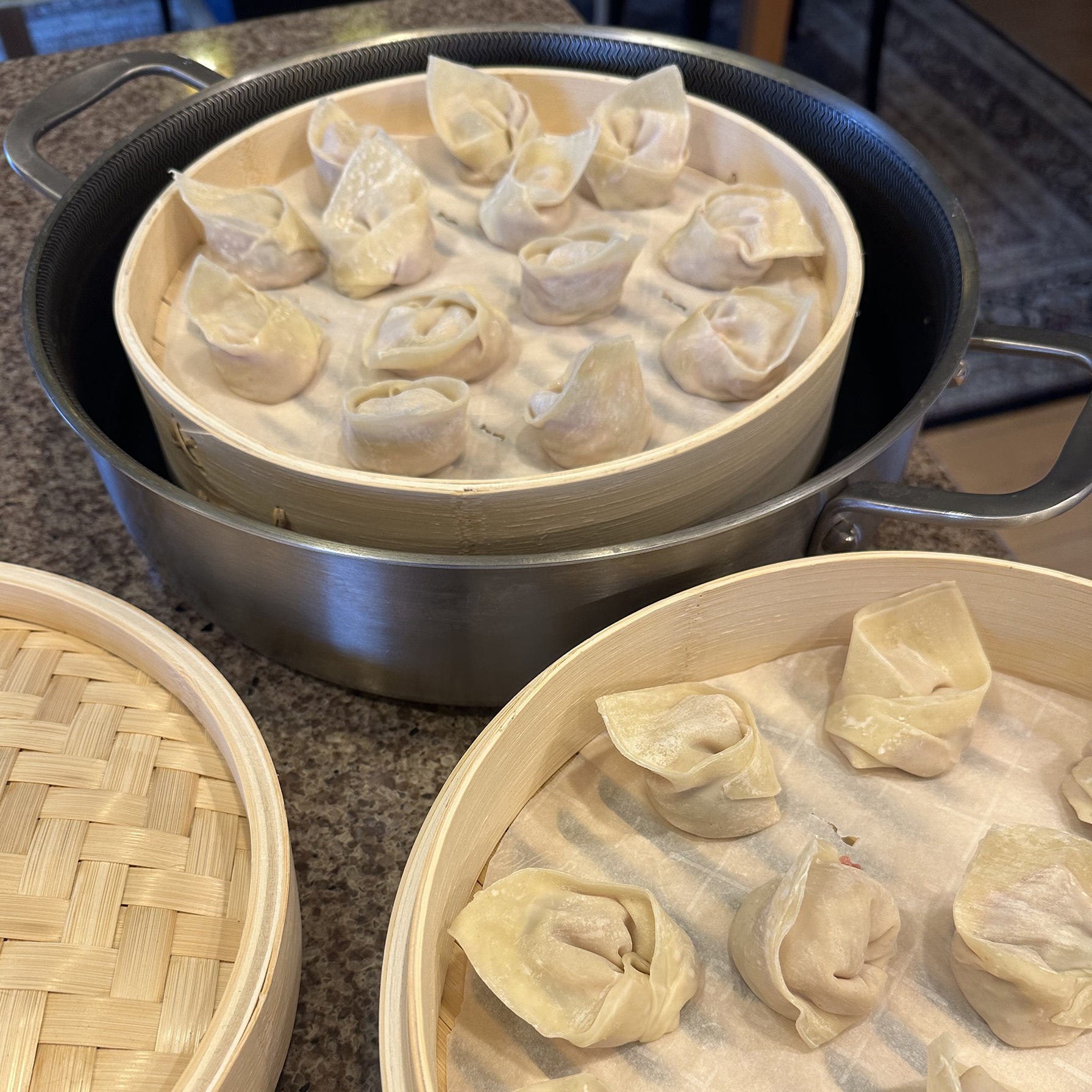

Dumplings are found across the world. Common types include Chinese wontons and potstickers, Japanese gyoza, Italian ravioli, Russian pelmeni, and the thick dough-drop dumplings often served in American Southern cooking. No matter which variation, I absolutely love these!
Dumplings
While dumplings are a type of dim sum, not all dim sum is a dumpling. The word “dim sum” comes from the Cantonese tim sam, which means “appetizer” or “touch the heart”. Dim sum can include dumplings, marinated pak choi, sticky rice leaves, or bamboo shoots.
Gyoza are Japan’s favorite dumplings, but they’re also descendants of Chinese jiaozi and potstickers: Some say they probably found their way across the East China Sea earlier, but became more popular after WWII.
They’re a similar crescent shape to potstickers and tend to be sealed with pleats on top as well. That said, they’re usually a little smaller, one to two bites. Potstickers are usually considered to be the crisp-fried version of the dumplings, while jiaozi can be fried, boiled, or steamed).
HANDMADE GYOZA/POTSTICKER/DUMPLING WRAPPERS
1-1/2 cup all-purpose flour
1/2 cup boiling water
Potato starch or cornstarch
Put flour in a large bowl. Add boiling water and stir with chopsticks. Let the dough cool a bit so it can be handled.
Knead the dough on a cutting board for 3-4 minutes by hand. Use a bit of flour if the dough sticks while kneading. Let rest, covered with plastic, for 30 minutes.
Divide the dough into two pieces. Then roll them out into two 12″ long logs, and cut into 12 one inch pieces per log.
Take a small piece of dough, flatten into a small disk by hand, and role out into a flat 4″ round with a rolling pin. Dust potato starch (or cornstarch) over dough whenever it sticks. Dust the rolled rounds with more starch when wrappers are laid over each other.
Cover the dough with plastic or a lightly damp cloth while working so it doesn’t dry out.
If you prefer to buy these, round gyoza wrappers are also referred to as Gow Gee and wonton wrappers. They are available in most grocery refrigerator sections alongside tofu, fresh pasta, usually in packs of 45.
PORK FILLING
Ground pork combined with vegetables like Napa cabbage or garlic chives, is the most traditional and widely popular dumpling filling in Chinese cuisine. Historically, pork was a prized ingredient, and its combination with vegetables creates the perfect balance of juicy meat and savory aromatics.
1-1/2 cups Napa cabbage, very finely chopped*
1 tsp salt, separated
1 lb (500 g) ground pork, the fattier the better
1 cup (62 g) garlic chives (nira*), finely chopped (remove the tougher root end)
*Nira or garlic chives are the authentic way to make this, but if you can’t find any, you can use either normal chives or the green part of shallots/scallions + 1 garlic clove. The flavor is not the same, but it is pretty similar.
1 garlic clove, crushed
1 tsp ginger, grated
1 tsp sesame oil
1 T cornstarch (potato starch or tapioca starch are acceptable substitutions too)
2 tsp soy sauce
*Cut white core out of the Napa cabbage and chop finely. Julienne the leaves and fine dice them as well. Saute them with 1/2 tsp salt in a lightly oiled saute pan for five minutes. Let cool.
Place ground pork, garlic chives, garlic, ginger, sesame oil, 1 T cornstarch, and soy sauce in a medium bowl. Add cooled cabbage.
Use your hands to mix the filling until very smooth (around five minutes).
Lay out a piece of parchment or Silpat on a sheet pan. Use a spoon to scoop out about a tablespoon of the pork mixture. Lay it on the parchment in a small crescent shape. Repeat until you’ve done a dozen or so. (It’s easier to manage if you measure the filling out ahead of time).
TO FILL
40 – 45 round gyoza wrappers (Gow Gee wrappers) (double the recipe or buy two packages accordingly)
Place one gyoza wrapper on your palm (left hand for right-handed people). Dip your finger in water and run it around the entire edge of the gyoza wrapper.
Place one of the pre-spooned fillings in the center of the wrapper. Fold wrapper over and squeeze it firmly in the center. Use your right hand assisted by your left-hand thumb to create 2-3 pleats on each side starting from the center. Check to make sure it is completely sealed.
Lightly oil a non-stick pan with 3 T toasted sesame oil (or vegetable oil). It should have a lid, but don’t put it on to start. Leaving the pan off the heat for now, wrap the remaining gyoza placing them close together but not touching each other in this pan.
TO COOK
Once the gyoza are ready, heat the non-stick skillet over medium high heat. Cook until the underside is light golden, then pour 1/4 cup of water around the gyoza and place the lid on. Turn down the heat to medium low.
Steam until the water has completely evaporated (so the golden underside is not wet and soggy) and the wrapper is slightly translucent on top – about 4 to 5 minutes.
Transfer them onto a plate with the golden side up.
NOTE: To cook from frozen using the same method, just add a splash of extra water and cook for 2 minutes longer. It won’t burn the underside because you add a bit of extra water.
DUMPLING SAUCES
BLACK VINEGAR SAUCE
1/4 cup soy sauce
1/4 cup black vinegar*
1 T sesame oil
1 garlic clove, minced
1/2 T grated ginger
1 scallion, thinly sliced
1/2 tsp crushed red pepper flakes (optional)
* Black vinegar is a dark, syrupy condiment made from fermented grains that adds umami flavor to food and is often used in Asian cooking. It is made from grains like glutinous rice, wheat, millet, sorghum, or barley and has been fermented for at least six months.
Feel free to substitute rice vinegar if you don’t have access to any black vinegar. (Note: seasoned rice vinegar is sweeter than regular rice vinegar).
Stir all ingredients in a bowl. Let the sauce sit in the bowl for 15 minutes before serving to let the flavors merge.
GOCHUJANG VINAIGRETTE
2 T Gochujang Korean hot pepper paste
2 T rice vinegar
2 T soy sauce
1 T sugar
1 T sesame oil
1 T olive oil
2 cloves garlic grated on a microplane
HOISIN LIME SAUCE
1/4 cup hoisin sauce
1/4 cup orange juice
1 lime, juiced
2 garlic cloves, finely minced
Refrigerate any leftover sauce in a jar.
PLUM SAUCE
4 prunes, soaked in 4 T hot water for 10 minutes
500 g black plums, cut into chunks, pits discarded
1/4 cup apple cider vinegar
1/2 cup white sugar
3 large slices of ginger
2 cloves of garlic, lightly bruised
1 cinnamon stick
2 whole star anise
1 tsp Chinese five spice
1 tsp sea salt
2 tsp cornstarch
Place the prunes and the soaking liquid into a saucepan along with the plums, vinegar, sugar, ginger, garlic, cinnamon stick, star anise and five spice. Simmer for 10 minutes. Remove from heat and discard the ginger, garlic, cinnamon stick and star anise.
Transfer the plum mixture into a food processor and blend until smooth. Pour into a clean saucepan and simmer over medium heat for another 2-3 minutes to thicken slightly. Season with salt. If the mixture is too thin, add the cornstarch and simmer until thickened. If the sauce is thick enough for your liking, simply transfer the sauce into jars and keep in the fridge for up to 2 weeks.
Great as a dipping sauce for spring rolls, egg rolls, wontons or as a sauce for grilled chicken or duck.
SWEET CHILI SAUCE
4 (about 100 g) long red chilies
3 (about 10 g) red birds’ eye chili
6 garlic cloves, peeled
150 ml water
100 g white sugar
15 ml white vinegar
15 ml fish sauce
(4 g) salt
(5 g) cornstarch mixed with 5 g water
Place chilies and garlic in a food processor and pulse until roughly chopped.
In a large saucepan over medium-high heat, combine the water, sugar, vinegar, fish sauce and salt. Add the chili and garlic mixture and simmer until sugar dissolves. Then turn heat down and simmer for 5 minutes to let the flavors develop.
Whisk in the potato starch mixture and gently simmer for another minute.
Allow to cool, then store in a glass jar in the refrigerator for up to three weeks.
FREEZING
Gyoza should either be cooked right away or prepared and immediately frozen.
To freeze, set the gyoza in a single layer on a sheet pan. Put it in the freezer. Once frozen through, you can remove them, put them in an airtight storage bag and return to freezer.
To heat from frozen:
Heat a pan over medium heat with the vegetable oil and place frozen potstickers either bottom or flat side down in the pan, making sure to leave plenty of room in between the dumplings. Once they cook, they will swell and you want to prevent them from sticking together. Cook for about 3-4 minutes or until they start to brown.
Get a lid ready and pour water into the pan until they cover the dumplings by about a third. Quickly cover the pan to avoid the oil from splattering out on you. Turn up the heat to about medium-high. Steam for about 7 minutes, or until dumplings are heated through on the inside.
Uncover the pan and continue to cook until the water evaporates. Since there’s still oil in the pan, the skin should crisp up again.
Once the water evaporates, use a spatula to gently lift the potstickers off of the pan. If they are stubbornly stuck, they may need a little more time cooking. Serve with the dipping sauces while hot.









Leave a Reply